Rob Horton’s repressed grief
The Tiger RisingRob Horton’s repressed grief is the emotional wound organized around his mother Caroline’s death and the family rule that follows it: do not cry, do not talk about her, and keep moving. Rob tries to contain that loss by sealing his feelings inside an imagined suitcase, but the tiger, Sistine Bailey’s questions, and the tiger’s death bring the grief back into speech and tears. The movement from silence to shared mourning gives the story’s emotional resolution its force: Rob and his father do not recover Caroline, but they finally acknowledge that they miss her together.
The loss and the rule of silence
Six months before the story’s present, Rob and his father had moved from Jacksonville to Lister after Caroline’s death. At the funeral, Rob sobbed so hard that his chest and stomach hurt. His father, standing beside him, began to cry too, but then slapped Rob to make him stop. The blow tore a hole beneath the arm of his father’s too-small suit jacket. In the aftermath, his father told him that crying could not bring Caroline back. The moment binds grief to both tenderness and violence: the father shares the loss, yet responds to their mutual pain by enforcing silence.
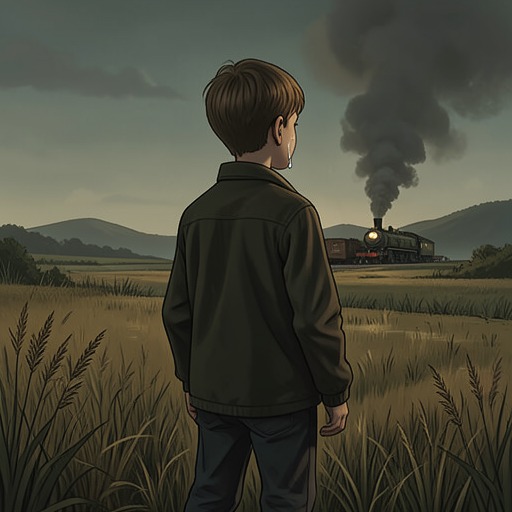
Rob does not cry again during the following six months. The effort is more than avoiding a visible display; it becomes a way of refusing attention to the loss. On the morning he discovers the tiger, he avoids thinking about Caroline as deliberately as he avoids thinking about the rash on his legs and the boys waiting to torment him on the bus. The story sets these different sources of distress beside one another, but gives the mother’s death its own depth: Rob has not thought about her since the funeral, when grief overwhelmed him and his father stopped it.
The suitcase as a method of not-thinking
Rob imagines his feelings as a suitcase packed too full, recalling the suitcase he packed when he and his father left Jacksonville. He stuffs his emotions inside, sits on the case, and locks it shut. The image makes repression an active, repeated task: the feelings remain present, pressing against the closure, while Rob tries to control whether they can emerge. When he discovers the tiger, he imagines the animal perched on top of the suitcase, blinking its golden eyes and sitting strong above the thoughts straining to get out. The tiger does not erase the burden; it temporarily gives Rob something else to concentrate on.
This private system shapes what Rob allows himself to notice. As he waits for the bus beneath the Kentucky Star sign, he thinks of the tiger rather than Caroline, the rash, or the threat posed by Norton and Billy Threemonger. Later, he again keeps the suitcase closed while thinking about the tiger, God and Adam in the Sistine Chapel, and Sistine Bailey. The repeated mental exclusions make the suitcase a narrative image for grief that has not disappeared: Rob can redirect attention, but the loss remains sealed inside the same container.
Naming Caroline
Sistine’s questions break through Rob’s practiced evasions. She asks how his mother died, and Rob answers that it was cancer. When Sistine asks his mother’s name, he explains that he is not supposed to talk about her. His father has told him that speaking will do no good because Caroline is gone and will not return; the family moved away from Jacksonville, Rob says, because people there always wanted to talk about her and they needed to get on with things. The account shows that silence is not simply Rob’s private preference: it is a family rule reinforced by the move and by his father’s stated attempt to avoid reopening the loss.
Sistine presses him to say the name. Rob closes his eyes and concentrates on keeping the suitcase shut, but eventually says, softly, “Caroline.” The name cracks the case open: the narration presents it as a word slipping free, not as a cure or a sudden end to grief. Sistine accepts the moment without turning it into a speech and says she will return the next day to make plans to let the tiger go. That brief exchange joins two things Rob has been trying to keep apart: his still-unspoken bereavement and the question of whether a captive animal should be freed.
The tiger’s death opens the suitcase
After Rob’s father shoots the escaped tiger, Rob attacks him, beating him with his fists and kicking him. When he sees that physical violence will not be enough, he does what he thought he could never do: he opens the suitcase. The words that come out are an accusation and a confession of need. Rob says he wishes his father had died instead of Caroline, that he hates him, and that he needs his mother. Grief, anger, and longing emerge together, after months in which Rob has tried not to speak of the person he lost.
Rob then demands that his father say Caroline’s name. In the silence after Rob’s outburst, his father whispers, “Caroline,” still holding the gun over his head and keeping his eyes open. The name becomes an act of recognition between them. The narration marks the moment by showing the world begin moving again; Rob’s demand has forced the loss neither to be hidden nor dismissed as something already finished.
Shared mourning
Rob buries his face in his father’s shirt and repeats that he needs Caroline. His father answers that he needs her too, but that neither of them has her and they have only each other. This response does not undo the earlier slap or the family’s months of silence; it changes what the father is willing to say and what the two of them can acknowledge together.
Rob says he is not going to cry, but tears come anyway, first from deep inside and then in a rush he cannot stop. The narration connects this release to the place where Caroline had been and where the tiger had been before it was gone. His father wipes tears from his own eyes and holds Rob, telling him he is all right. Their shared crying reverses the funeral’s pattern: there, the father also cried but stopped Rob; here, he recognizes his own grief and comforts his son as both of them mourn. Rob’s repression gives way not to forgetting, but to the possibility of speaking his mother’s name and enduring the loss with his father.